This essay attempts to explore that question from scientific, philosophical, and social perspectives — examining how the same invisible force that governs planets and apples also quietly shapes the inner architecture of human life.
01 Scientific Basis: The Principle of Gravity
Newton's Law of Universal Gravitation states that every object with mass attracts every other object with mass. The force decreases with distance, but it never reaches zero.
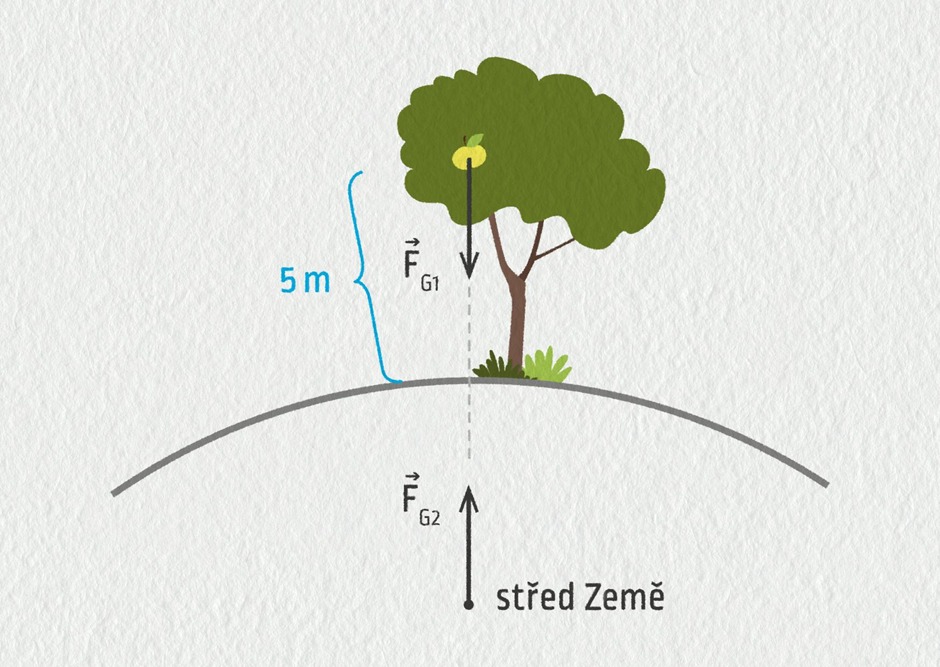
Force weakens with distance —
but never disappears entirely.
Its deeper implication extends far beyond physics:
- Every action has an effect
- Everything is interconnected in some form
This leads us to a broader conclusion: nothing in the universe exists in complete isolation. Every particle, every person, every thought is part of a larger web of influence and consequence.
02 Gravity of Thoughts: A Neuroscience Perspective
The human brain does not merely generate thoughts — it transmits them as energy and signals that shape our reality from within.
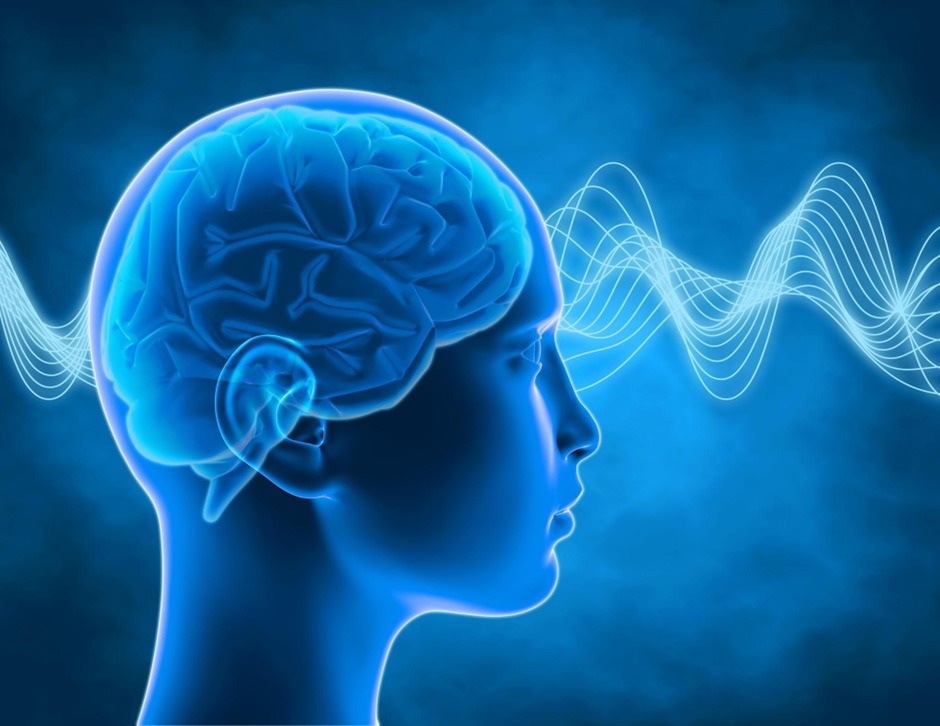
According to neuroscience:
- Thoughts = electrical signals travelling through neurons
- Emotions = chemical reactions triggered by those signals
- Behaviour = the visible outcome of both
When you repeatedly think in a certain pattern — whether optimistic or negative — the same neural pathways become progressively stronger and more automatic. This is called Neuroplasticity: the brain physically reshapes itself in accordance with its habitual thought patterns.
03 Gravity of Actions: A Philosophical View
In Indian philosophy, this is known as the Karma Theory — and it mirrors the logic of gravity with remarkable precision.
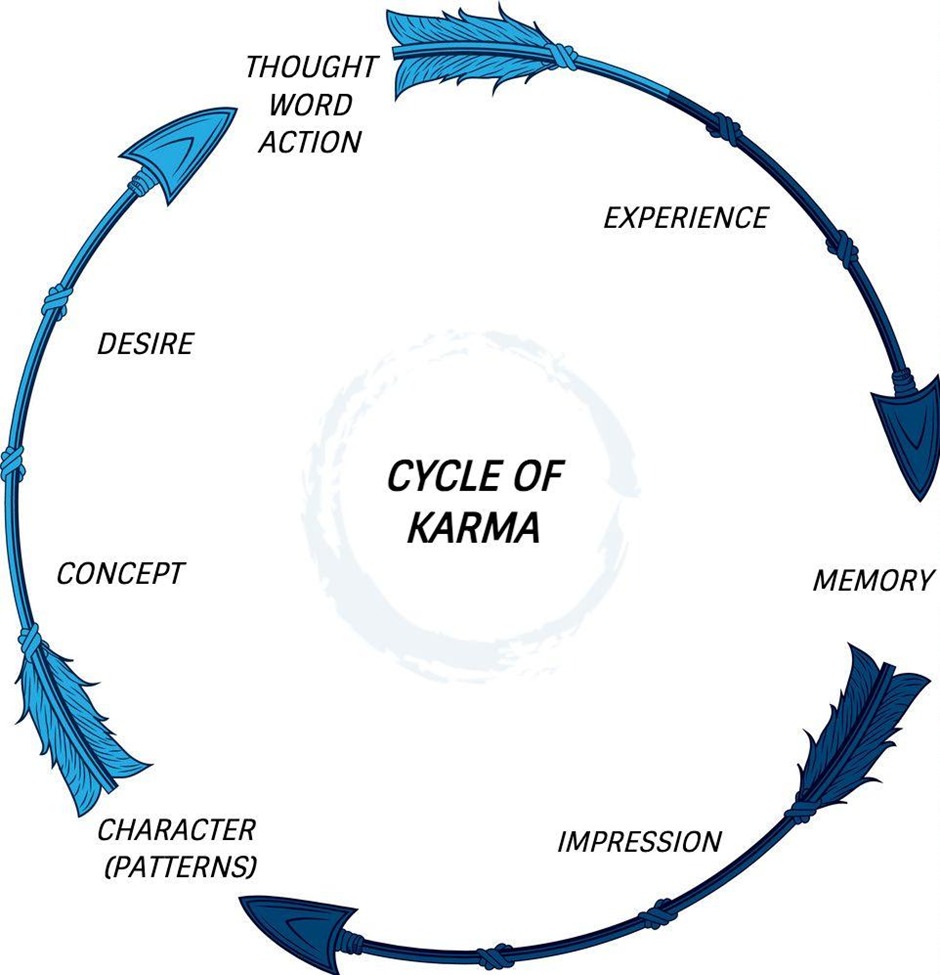
According to the Karma Theory:
- Every action is a form of energy
- Energy is never destroyed — it only transforms
- It returns, in some form, to its origin
"Perform your actions; the results will come in their own time."
— Bhagavad Gita (Karmanyevadhikaraste)
The parallel to gravity is striking:
- What you put into the world returns to you
- Time and circumstances may shift, but consequences persist
04 Social Examples: The Return of Behaviour
The abstract becomes concrete when we observe human interaction. Social gravity operates around us every day — not as magic, but as the predictable return of what we send out.
- Give respect → society returns respect
- Give contempt → the same returns in kind
- Sow trust → receive trust
- Betray → a cycle of distrust begins
- Positive people attract positive company
- Negative thinking often leads to isolation
This is not magic. It is the social gravity of human behaviour — as reliable, if less visible, as the force that keeps planets in orbit.
05 Psychological Theories: "You Attract What You Are"
Modern psychology has approached this truth through several lenses:
- Law of Attraction — the idea that focused intention draws corresponding outcomes
- Self-fulfilling prophecy — believing something will happen increases the likelihood of it happening
- Cognitive bias — we notice and attract what we are already primed to expect
The common thread across all three: your inner state influences your outer reality. The world you perceive, and the world you build, is shaped by the quality of attention and intention you bring to it.
06 Example from Nature: The Ripple Effect
Consider what happens when you throw a stone into still water. Ripples form at the point of impact. They spread outward in all directions. And eventually, they return — reflected — to the edges of the pool.
Our thoughts and actions behave the same way:
- Even a small thought creates ripples in the people around us
- Even a small act of kindness — or cruelty — spreads further than we see
- And in time, those ripples return
The stone need not be large. The water need not be vast. The law operates at every scale — in families, communities, workplaces, and nations.
07 Conclusion: The Invisible Gravity of Life
Gravity is not only a physical law. It is, in the deepest sense, a principle of life — a reminder that the universe operates through connection, consequence, and return.
The key insights are simple, but their implications are profound:
- Every thought is a seed — plant it with intention
- Every action is energy — release it with awareness
- Every energy has consequences — expect them with honesty
- Think positively — positivity will return
- Act rightly — goodness will return
- Maintain balance — life stabilises
"Just as the Earth pulls us toward itself, our thoughts and actions return to us.
Gravity does not only teach us why we fall — it reminds us that whatever we send out, comes back."